Special Guests
We cordially extend an invitation for you to join us at this conference. Your presence would be greatly appreciated.
Update Time: 2025-10-23 14:06:51 CST
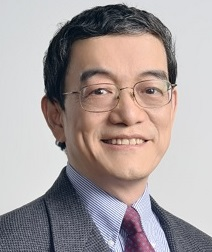
刘轶军
南方科技大学
Advances of the Fast Multipole BEM for 3-D High-Frequency Acoustic Wave Problems
Abstract | Introduction
In this talk, we will present a new wideband fast multipole boundary element method (BEM) based on a fast directional algorithm (FDA) for solving large-scale 3-D full- and half-space acoustic wave problems. An improved FDA is developed to expand the kernel functions, enabling efficient matrix-vector product across a wide range of frequencies. Using the symmetry of the half-space problem, we introduce techniques to reduce the computational cost in fast multipole translations. Specifically, only an additional moment-to-local (M2L) translation for the image part is required, bypassing the computation and storage of other image-related translations. The iterative solver GMRES is used to further accelerate the solutions in the proposed FDA-BEM. Numerical examples include large scale models with the nondimensional wavenumber ka reaching to 800 and the number of elements to 10 million solved successfully on a workstation using the developed fast BEM. These results validate the accuracy of the method and demonstrate its nearly linear computational efficiency in solving large-scale 3-D full- and half-space acoustic problems.
刘轶军,南方科技大学讲席教授,西北工业大学飞机结构强度专业学士和固体力学硕士,美国伊利诺伊大学香槟分校(UIUC)理论与应用力学博士。1992-1994年在爱荷华州立大学(ISU)做博士后研究;1994-1996年先后在美国三家企业(包括福特汽车公司)做CAE工程师;1996年起在美国辛辛那提大学(UC)机械工程系任教,历任助理教授、副教授、教授,CAE研究室主任及宝洁-UC高性能数值模拟研究中心技术主任,共培养博士及硕士研究生60余位。研究方向为计算力学(边界元及有限元方法)及在断裂力学、结构动力学、声波、弹性波及电磁波数值模拟中的应用。研究曾获美国国家科学基金会、中国国家自然科学基金会及工业界的支持。近20年来专注快速边界元方法(FastBEM)在大规模位势问题、弹性力学、流场、声场及电磁场计算中的算法研究、软件研发及应用。英文专著 Fast Multipole Boundary Element Method 一书2009年由剑桥大学出版社出版。基于近30年声学边界元方法的研究成果,开发了具有自主知识产权的边界元软件(FastBEM Acoustics),已被多个企业、研究机构和高校采用。发表研究专著三部、论文100余篇,引用8000余次,H影响因子=50 (谷歌学术),2014-2023连续10年入选 Elsevier 中国高被引学者榜单(计算力学/力学)。现为国际期刊 Engineering Analysis with Boundary Elements 编委。2012年获中国杜庆华工程计算方法奖,2015年入选美国机械工程师学会会士(ASME Fellow)。
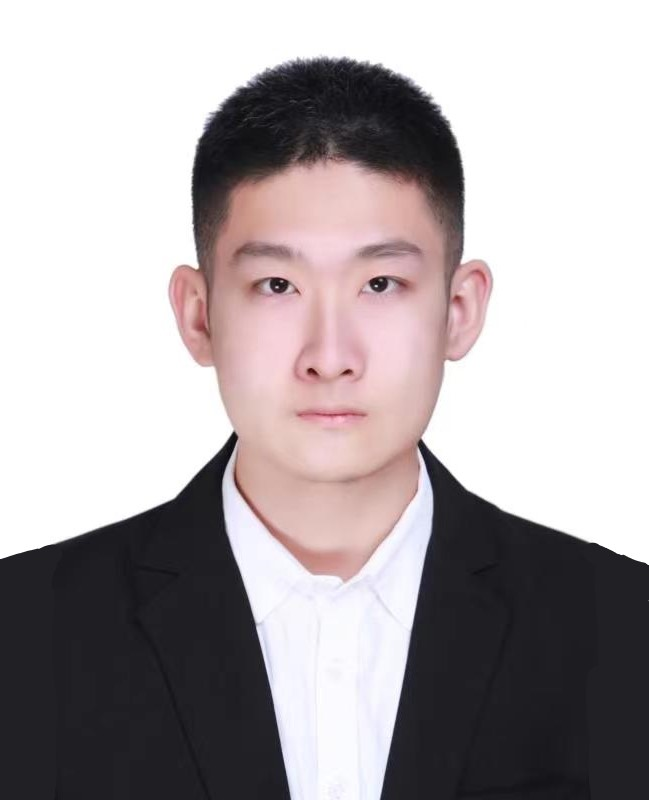
刘伟杭
大连理工大学
Bi-Fo时间缩放方法在涡轮叶片瞬态热-流-固耦合分析中的应用
Abstract | Introduction
航空发动机涡轮叶片在瞬态工况下的热分析面临流体对流与固体导热巨大时间尺度差异带来的计算瓶颈。本文讨论了一种创新的多尺度时间缩放方法(Bi-Fo方法)显著提升瞬态共轭传热(CHT) 这一关键多物理场问题的模拟效率。
大连理工大学在读博士生
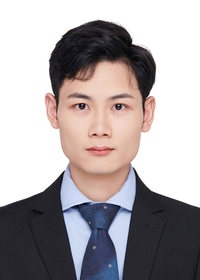
刘学平
北京理工大学
金属增材制造多场耦合问题的局部多网格物质点法
Abstract | Introduction
金属增材制造多场耦合问题的局部多网格物质点法 刘学平1,廉艳平1*,李明健1 1.北京理工大学先进结构技术研究院,北京,100000 * 通讯作者:廉艳平, E-mail: yanping.lian@bit.edu.cn 金属增材制造过程涉及强非线性多场多尺度耦合,对数值算法的保真度和计算效率提出巨大挑战。本研究依据问题高度局部化特征和局部叠加细化思想,建立热-流-固多场耦合的局部多网格物质点法。将材料域视为两个独立且具有不同空间离散分辨率的求解域叠加,其中,固定域覆盖整个材料域和空气域,采用粗基网格高效求解凝固材料传热、变形的热-固耦合问题;叠加域覆盖熔池及周边区域并随热源移动,采用精细网格高精度求解材料熔化、流动、凝固和变形的热-流-固耦合问题。建立动态固连接触界面耦合模型实现两个求解域之间的信息交互。为匹配质点在不同网格分辨率下的精度,基于子网格划分策略提出质点的分裂与合并方案,并用以单元体积分数的计算。基于该方法,对基准算例和粉末床熔融工艺下的金属增材制造过程进行数值模拟,并与文献和实验结果比较,精度具有良好的一致性,计算效率相较单一分辨率提高了1~2个数量级,有望为金属增材制造多尺度多场耦合的高效高保真数值模拟提供强有力的工具。 关键词:物质点法;热-流-固耦合;局部多网格;动态固连接触
刘学平,北京理工大学博士生,研究方向为物质点法、流固耦合,金属增材制造多场耦合过程模拟。
刘轩廷
北京大学
A cross-scale CFD-DEM for particulate flow
Abstract | Introduction
Hybrid CFD-DEM, which integrates the characteristics of un-resolved, semi-resolved, and fully resolved methods, is employed for high-fidelity multi-resolution simulations of cross-scale polydisperse particle-fluid flow systems. Its core principle involves selecting appropriate methods based on the grid size to particle diameter ratio ($\Delta/d$). For instance, the semi-resolved method is applied when $0.1<\Delta/d<3$. This range covers a wide spectrum of particle sizes, with the maximum-to-minimum particle diameter ratio ($d_{max}/d_{min}$) reaching up to 30. In most studies, a uniform grid is employed to maintain the size ratio $\Delta/d$, ensuring that medium-sized particles fall within the $1<\Delta/d<3$ range to achieve optimal results. However, in practical industrial applications, the grid size is dictated by the Reynolds number and specific geometry, whereas particle sizes are predetermined by the operational scenario. Consequently, some particles inevitably fall within the $0.1<\Delta/d<1$ range, where the applicability and reliability of the semi-resolved method remain uncertain. In this study, we first develop and validate a hybrid CFD-DEM model. Subsequently, we examine and discuss the applicability and reliability of the semi-resolved method based on the hybrid CFD-DEM results. The findings indicate that the semi-resolved method underestimates the particle wake field to some extent; when the particle diameter ratio $d_{max}/d_{min}$ is relatively large, the background field reconstruction method may introduce stability concerns; furthermore, for particles with smaller size ratios $\Delta/d$, the volume fraction calculation approach must be carefully chosen to avoid inaccurate drag force predictions
刘轩廷,北京大学博士生,导师为刘谋斌教授。主要研究方向为增材制造、颗粒流动的多相多物理场数值建模与仿真。下·
刘华雩
大连理工大学
基于NiTI合金网堆叠的多孔弹卡冷却系统力学性能分析
Abstract | Introduction
弹卡制冷是一类新兴的、具有理论高能效的制冷机制,是取代蒸汽压缩制冷机制的潜在可行手段。最近,我们提出了一种基于堆叠式NiTi合金网的弹卡制冷原型机。作为制冷系统核心的合金网不仅加工简单,且具有高孔隙率和比面积,可提高流固间的热交换效率。基于Lagoudas的记忆合金本构模型,我们通过代表性体积元方法对堆叠的NiTI合金网的力学性能进行了分析。考虑不同孔隙度的金属网和不同加载方式,我们计算了马氏体相在加载路径中的改变情况。结果表明,密集编织的合金网马氏体转化率可达90%以上,但相比于1维模型,所需压缩量要大数倍。同时,针对NiTi金属丝滑动导致的微观屈曲现象进行了预测,结果表明垂直加载临界压力要比平行加载大得多。
男,大连理工大学副教授。本科就读于华中科技大学工程力学专业,2021年获得大连理工大学航空航天力学与工程博士学位。先后在大连理工大学、卡尔斯鲁厄理工学院从事博士后研究。主要研究方向为流体动力学及热防护系统多场耦合分析。
刘谋斌
北京大学
极端环境多场耦合数智仿真与软件研发
Abstract | Introduction
极端环境多场耦合数智算法与仿真软件是国内外学者近年来密切关注的前沿重点方向,也是力学学科规划报告中明确列出的学科重大问题。极端环境多场耦合问题广泛存在于海洋、空天、先进制造、防护工程及核能工程等众多领域,具有强动载、强非线性、强耦合效应等特点,涉及瞬态运动界面及极端流固变形。光滑粒子动力学(smoothed particle hydrodynamics, SPH)是研究极端环境多场耦合的重要方法,已经成为计算力学学科前沿方向,并被ABAQUS、ANSYS DYNA及PAM-CRASH等主流商业软件采用。本报告介绍近年来北京大学先进计算与智能工程团队在极端环境多场耦合数智算法、仿真软件及工程应用方面的研究进展。
刘谋斌:北京大学力学与工程科学学院副院长、教授,北京大学工业软件研究中心主任。主要从事计算(流体)力学、流固耦合力学、工业软件及智能制造相关的研究工作。在极端环境多场耦合数智仿真的基础理论、数值算法和关键技术等方面取得了系列创新成果。建立了SPH方法理论基础,发展了系列高精度SPH算法,形成了自主可控软件;发展了热流固多场耦合算法,形成了增材制造、激光辐照材料熔融凝固及烧蚀破坏数智模拟平台。出版英文专著两部,在《Journal of Computational Physics》、《Archives of Computational Methods in Engineering》等期刊上发表SCI论文180多篇,Google学术引用16300多次;是EABE与IJCM等SCI期刊的副主编及其他多种国内外期刊的编委;近年来在计算力学领域主流学术会议上应邀作大会及半大会报告30多次,包括2016年SPHERIC国际研讨会60分钟大会报告、2022年世界计算力学大会(WCCM)45分钟半大会报告及2023年粒子方法国际会议(ICPM)45分钟大会报告。曾获MIT计算力学奖、新加坡李光耀杰出研究奖、中科院“百人计划”、教育部自然科学类一等奖,以及国际计算方法奖等荣誉和奖励;长期蝉联入榜Elsevier中国高被引学者和美国斯坦福大学全球前2%顶尖科学家榜单。
吕军
大连理工大学力学与航空航天学院
基于自由单元法的薄板壳力学问题研究
Abstract | Introduction
本文提出了一种高效的强形式配点法——自由单元配点法(FECM),用于求解Kirchhoff薄板壳力学问题。该方法采用拉格朗日等参单元物理量插值的配点技术,通过逐节点生成系统方程,在保持求解高阶方程稳定性的同时显著提升了易用性。其核心优势体现在:通过在每个配点处创建独立拉格朗日等参单元并自由选取相邻节点,既有效缩减了系数矩阵带宽,又利用形函数的Kronecker delta特性简化了边界条件的处理流程。针对控制方程中的高阶导数项,特别设计了递归计算技术,使该方法具备处理任意高阶微分方程的能力。此外,提出的物理分解策略将四阶偏微分方程降阶为二阶方程组,显著提高了形函数导数的计算效率。与有限元相比,由于该方法不存在单元界面,因此无需考虑高阶问题所带来的单元连续性问题,与传统无网格法相比,可以高效的求解任意高阶形函数偏导数从而提高计算效率。通过对薄板壳的力学问题的数值模拟,验证了该方法的高效性和准确性。
教授、博士生导师,力学与航空航天学院党委委员,航空航天系主任,院长助理,飞行器工程实验教学中心主任,辽宁省空天飞行器前沿技术重点实验室副主任。主要从事飞行器智能热防护系统分析与设计等方面的研究。近五年承担了国家自然科学基金,军科委创新项目以及科工局基础研究等项目20余项。提出了飞行器非线性扩展多尺度有限元方法以及跨学科紧耦合效应的多场耦合单元微分法等特色方法。发表学术论文70余篇、专利10余项,成果应用于国家发动机重大专项以及新一代载人航天与探月工程等国家重大工程。近五年负责总经费1000余万元,发表期刊论文25篇,SCI收录23篇,IF>3.0期刊20篇,一作/通讯13篇(含中科院TOP期刊等),授权专利7项以及软著2项。
孙政
江西理工大学
桩土耦合作用下定日镜支架锚杆水平承载力物质点法研究
Abstract | Introduction
定日镜作为太阳能光热发电系统的关键部件,其支架基础在风荷载等水平力作用下的稳定性直接影响电站安全运行。锚杆基础因具有施工便捷、经济性好等优势被广泛应用,但其水平承载力受桩土界面非线性耦合效应影响显著,传统有限元法在模拟大变形接触和土体渐进破坏过程中存在网格畸变、收敛困难等局限。提出基于B样条物质点法的桩土耦合动力学分析框架,通过引入高阶连续基函数提高传统物质点法的计算精度,引入动态松弛技术,形成土体初始应力场,建立考虑桩土界面接触和土体非线性本构的桩土耦合动力学模型。结合室内试验,验证模型准确性;系统开展土体黏聚力、内摩擦角、锚杆长径比及桩土相对刚度、初始应力场等关键参数的敏感性分析,揭示不同工况下锚杆水平承载力-位移特征曲线的演化规律。研究表明:B样条物质点法能够精准捕捉刚性桩“整体倾斜”与弹性桩“弯曲破坏”等典型桩土耦合破坏模式;锚杆长度超过8倍直径后,锚杆长度的增大不能有效的增大锚杆的水平承载力;水平变形系数随直径增大呈幂指数减小,而承载力特征值呈负指数增长;通过增加土体初始应力,可以有效提高锚杆的承载能力。研究成果为太阳能光热电站定日镜支架基础的优化设计提供了理论依据,提出的“预先夯实-直径优先-长度适配”设计原则,推动了B样条物质点法在岩土工程领域的实际应用。
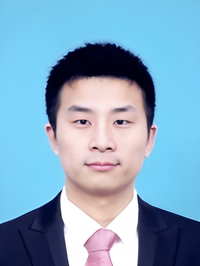
孙政,男,江西理工大学特聘教授,硕士生导师。江西省杰出青年基金、江西省主要学科学术和技术带头人-青年项目获得者。获江西省科技进步一等奖1项(排序4/15),获江西省教学成果奖青年培育项目1项(排序1/15);主持江西省一流本科课程:《工程力学(一)》;主持国家自然科学基金项目2项,主持江西省杰出青年基金等省部级项目3项,主持军工类委托课题3项;指导学生在中国大学生创新大赛(2024)“青年红色筑梦之旅”赛道中荣获省级“金奖”,本人获“优秀创新创业导师”称号;在CAMWA、IJNME、EABE、JNNFM、AMSS、Eng. Comput.、计算力学学报、应用数学和力学、力学与实践等本专业国内外重要学术期刊发表高水平学术论文20余篇;拥有自主知识产权科技成果4项(其中,排名第1授权中国发明专利3项和实用新型专利1项),出版学术专著2部;主编教材2部。2022年和2023年分别获江西省主要学科学术与技术带头人-青年人才和江西省杰出青年基金等人才项目;2024年入选教育部“中西部高等学校青年骨干教师国内访问学者项目”(导师:清华大学张雄教授)。
孙庄敬
宁波工程学院
结构振动超收敛等几何分析的协同积分准则
Abstract | Introduction
针对等几何结构振动分析存在的精度掉阶问题,通过深入分析等几何基函数与积分规则的张量积构造,提出了弱形式数值积分的变分一致性及最优收敛率理论基础。研究表明,为确保等几何弱形式的数值积分变分一致性以及频率最优收敛性,数值积分方案必须能够精确积分2p-2m次多项式,其中,p是基函数的完备多项式次数,m是伽辽金弱形式中涉及的微分阶数。文中不仅从理论层面证明了相关结论,还针对二阶和四阶问题中违反数值积分的变分一致性条件的情况进行了详细分析,揭示了不同边界条件下结构振动频率收敛率下降问题及其本质原因。研究同时表明,为实现结构振动频率的超收敛计算,数值积分方案必须满足协同积分准则,即同时满足频率误差度量要求与数值积分变分一致性。
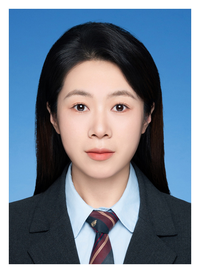
姓名:孙庄敬 博士毕业于厦门大学土木工程系 就职学校:宁波工程学院