Special Guests
We cordially extend an invitation for you to join us at this conference. Your presence would be greatly appreciated.
Update Time: 2025-10-23 14:06:51 CST
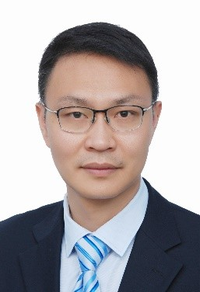
程长征
合肥工业大学
含体积分的边界积分方程中近奇异积分的解析计算
Abstract | Introduction
虽然边界积分方程中近奇异积分的计算得到了有效解决,但含体积分的边界积分方程中近奇异积分的计算一直是边界元法研究的一个难点。为了发挥边界元法仅在边界积分的优势,文章通过引入双重互易法,将体积分转化为边界积分。然后,采用一系列近奇异积分解析公式来计算边界积分方程中的近奇异积分。文章分别考虑了带热源的热传导边界元法、瞬态热传导边界元法、带体力的弹性力学边界元法、各向异性材料边界元法中体积分的边界化,以及近奇异积分计算难题。结果表明,所引用方法可以将体积分有效转化为边界积分,而采用解析算法后,可以成功计算出更加靠近边界的物理量。
现为合肥工业大学教授、博士生导师、黄山青年学者,安徽省杰出青年基金获得者,安徽省教坛新秀,全国力学教学优秀教师,曾获教育部霍英东青年教师奖、杜庆华工程计算方法优秀青年学者奖、安徽省级教学成果奖、安徽省自然科学奖等多项奖励。主要研究领域为计算固体力学、结构强度学、复合材料力学,主持国家自然科学基金项目4项、省部级项目4项。在IJNME和CMAME等计算力学类、IJF和EFM等断裂力学类、IJSS和IJMS等固体力学类国际顶级期刊以及《力学学报》、《中国科学》等国内核心期刊上发表学术论文110余篇,出版学术专著2部。兼任安徽省力学学会教育工作委员会主任委员、安徽省力学学会理事、工程计算方法联络委员会委员、南方计算力学联络委员会委员等。
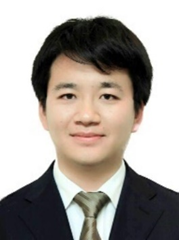
董雷霆
北京航空航天大学
基于碎点法的结构复杂破坏过程分析
Abstract | Introduction
工程结构在服役过程中承受多种准静态和动态载荷,可能造成结构破坏。仿真分析是结构设计的重要工具,但结构破坏过程可能涉及材料大变形和结构断裂破碎等极端现象,给仿真分析带来了挑战。本报告主要介绍团队近年来提出的一种新型无网格仿真方法—碎点法,该方法兼具弱形式无网格方法和不连续型方法的特点,能够有效模拟上述极端力学行为。一方面,该方法将求解域离散为空间中的节点和子域,并基于支持域内的节点群构造子域的位移函数,因此该方法是一种基于节点的无网格方法,具有抵抗畸变的能力,适合模拟材料大变形。另一方面,该方法使用分片连续位移函数,因此是一种不连续型仿真方法,易于在模型中引入显式裂纹,适合模拟结构断裂和破碎。此外,由于该方法是基于弱形式方程构造的,因此具有较好的稳定性;且由于放松了相邻子域间的位移连续性要求,因此可以使用多项式的位移函数,给弱形式方程的积分计算带来了便利。本报告将介绍碎点法的基本理论,并介绍基于该方法的含缺口结构强度分析、复材结构准静态/疲劳损伤分析、陶瓷复合结构冲击破坏过程分析等结构复杂破坏过程分析,验证该方法在结构极端变形以及大量复杂裂纹萌生和扩展过程仿真方面的有效性,最后介绍该方法在航空结构防护设计方面的应用。
北京航空航天大学教授、博导,航空学院党委书记,国家级青年人才,军科委创新特区专家、空军应推平台组专家。主要研究方向包括飞机疲劳与损伤容限、结构毁伤与防护、结构数字孪生技术与应用。承担军科委1XX重点、173、163项目,工信部民机科研、工业软件项目等30余项科研任务,在 AIAA J、IJNME、Nature Materials 等航空航天/结构与材料领域权威期刊发表SCI论文94篇,在剑桥大学出版社出版专著1部,获GF科技进步二等奖(2024年,排1)、卞学鐄奖、杜庆华计算方法奖等荣誉。
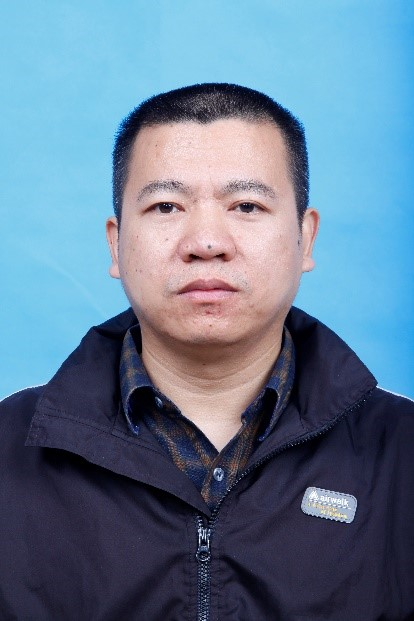
傅向荣
中国农业大学土木工程系
空间与时域的多阶变量理论
Abstract | Introduction
在工程与科学计算中,空间和时域中常用的等参协调元和中心差分法都属于单类变量理论,在使用中存在诸多问题。 如何在计算格式的数学原理和变量类型中引入高阶变量,提高算法的精度和稳定性,一直是一个值得探讨的方向。传统的等参元面临网格畸变敏感、应力精度低和应力奇点计算困难等难题,多阶变量理论通过引入基于解析试函数广义协调元和含转角自由度超协调元,有效地克服了等参元理论的固有缺陷。不同于在普通协调元中采用的线位移协调插值格式,基于多阶变量理论的超协调元,在单元分片插值函数中,引入了转角自由度等线位移导数的高阶变量协调性假设,并通过积分推导获得超协调的多阶变量单元模型。 数值算例表明,基于多阶变量理论的单元具有计算精度高和计算效率好的优势,是构造高性能数值算法的一种新的通用理论。 在时域计算中,通过引入位移和动量为变量构造的多阶变量显式动力学迭代格式DSEPI,也在算法精度上明显优于中心差分法对应的单类变量方案。
傅向荣,男,1972年5月生,湖南安化人。2002年7月获清华大学土木工程系结构工程专业博士学位。2002年至2004年,在北京大学力学与工程科学系从事博士后研究。2004年7月至今,在中国农业大学水利与土木工程学院工作。担任中国力学会结构工程专业委员会委员、工程计算方法联络委员会委员,中国仿真学会CAE仿真专业委员会委员。曾获Emerald出版社年度“Highly Commended Award”、杜庆华工程计算方法优秀青年学者奖、宝钢优秀教师奖、国家自然科学二等奖(4/5)、全国徐芝纶力学优秀教师奖等。

傅卓佳
河海大学
机器学习赋能无网格配点技术
Abstract | Introduction
随着人工智能技术的快速发展,机器学习技术在众多科学与工程领域展现出强大的应用潜力。本文主要介绍团队近年来在机器学习赋能无网格配点技术及其应用方面的研究工作,主要涉及结合机器学习技术的无网格配点技术和融入无网格配点思想的神经网络技术两方面。在结合机器学习技术的无网格配点技术部分,我们将依次介绍本文方法在管道内部边界识别、生物肿瘤边界识别以及超材料逆向设计中的应用。在融入无网格配点思想的神经网络技术部分,我们将重点介绍两类改进的物理信息神经网络计算框架:课程-迁移学习物理信息神经网络以及物理信息核函数神经网络。
傅卓佳,河海大学力学与工程科学学院教授,国家自然科学基金优青项目获得者、德国洪堡学者,工程力学系系主任,数智力学与工程科研团队带头人,博导。主要研究方向包括:智算力学及工程仿真软件,海洋装备结构安全运维,计算材料结构一体化设计。迄今出版中英文专著各1部,发表学术论文100余篇,6篇论文入选为ESI 高被引论文(前1%),授权发明专利3项,获得软件著作权9件。现任中国力学学会计算力学专业委员会委员、中国自动化学会分数阶系统与控制专业委员会委员、国际华人计算力学协会理事、全国超材料学会理事、全国工程计算方法联络委员会委员、江苏省力学学会信息化工作委员会副主任委员。入选Elsevier中国高被引学者名单和斯坦福大学全球前2%顶尖科学家榜单,担任SCI期刊《Engineering Analysis with Boundary Elements》副主编。
韩梦威
合肥工业大学
基于特征频率拓扑优化的声腔表面吸声材料布局设计
Abstract | Introduction
基于特征频率拓扑优化的声腔表面吸声材料布局设计 韩梦威1,郑昌军1,毕传兴1 (1.合肥工业大学噪声振动工程研究所,安徽合肥230009) 摘要:在声腔表面铺设多孔吸声材料是抑制声腔共鸣噪声的一种有效手段,然而全覆盖的铺设方式并不总能达到最优的降噪效果。为了在提升降噪性能的同时减少材料用量,本文提出了一种拓扑优化设计方法,用于确定多孔吸声材料在声腔表面的最优布局。该方法直接以声腔系统特征频率为优化目标,特征频率实部代表声腔共振频率,而虚部代表阻尼损失,可用来表征吸声材料抑制声腔共振噪声的性能。因此,本文构建了以某一阶或多阶特征频率虚部为优化目标的拓扑优化模型,该方法基于固体各向同性材料惩罚模型建立多孔吸声材料阻尼参数的插值模型,引入吸声材料属性和单元材料密度之间的关系,以单元材料密度为设计变量,边界上每个单元均对应一个设计变量。对于由多孔吸声材料频变特性导致的非线性特征值求解问题,本文采用围道积分法对声腔非线性特征值问题进行线性化处理;在此基础上,推导出非线性特征频率灵敏度的计算式,并借助移动渐近线法对设计变量进行迭代求解,从而实现吸声材料布局的拓扑优化设计。 Design of Sound-Absorbing Materials Layout on Acoustic Cavity Surfaces Based on Eigenfrequency Topology Optimization Abstract: Covering the surfaces of acoustic cavities with porous sound-absorbing materials is an effective approach to suppress the resonant noise of cavities. However, a fully-covered layout does not always achieve optimal noise reduction performance. To enhance the noise reduction performance with minimal material usage, this paper proposes a topology optimization design method to determine the optimal layout of porous sound-absorbing materials on the surface of the acoustic cavity. The optimization directly targets the eigenfrequencies of the cavity system, where the real part represents the resonance frequency and the imaginary part reflects damping loss, serving as a measure of the material’s capability to suppress resonance. A topology optimization model is constructed by taking the imaginary part of one or multiple eigenfrequencies as the objective function. An interpolation scheme for the damping parameters is developed based on the Solid Isotropic Material with Penalization (SIMP) approach, introducing the relationship between the porous material properties and the element densities, with each boundary element assigned a design variable. To address the nonlinear eigenvalue problem arising from the frequency-dependent characteristics of porous materials, the contour integral method is employed for linearization. On this basis, the sensitivity formulation of nonlinear eigenfrequencies is derived, and the Method of Moving Asymptotes (MMA) is adopted to iteratively update the design variables. This framework enables the topology optimization of sound-absorbing material layouts, achieving effective suppression of cavity resonances with reduced material usage. Keywords: acoustic cavity resonance; porous sound-absorbing materials; topology optimization; nonlinear eigenfrequencies; contour integral
合肥工业大学机械工程学院在读博士生,导师:郑昌军教授
蒋傲兵
郑州轻工业大学
基于梯度增强物理信息化神经网络的求解方法
Abstract | Introduction
物理信息化神经网络在求解高维偏微分方程问题时存在收敛速度慢、精度不高等局限性。本报告基于梯度增强物理信息化神经网络,通过引入控制方程残差的梯度信息作为损失函数项,采用硬约束施加边界条件和初始条件,可以有效提升物理信息化神经网络的收敛性和精度。通过应用梯度增强物理信息化神经网络方法研究了多维度波动方程的正向求解和真实波速的反求问题。与传统物理信息化神经网络方法进行对比分析,梯度增强物理信息化神经网络在参数识别和方程求解中具有明显的优势,可以为科学工程计算提供了理论依据。
蒋傲兵,郑州轻工业大学硕士研究生,主要从事机械CAE技术,机械优化设计和计算力学研究。发表学术论文1篇,曾获本科学业奖学金,研究生学业奖学金。全国大学生先进成图大赛二等奖,河南省数值建模大赛二等奖。
景钊
西北工业大学
基于能量布尔运算的几何模拟全域变分数值理论与算法
Abstract | Introduction
为解决复杂几何域上的力学变分问题,提出了基于全域试函数并可在复杂几何域上高精度积分的能量元数值方法。通过将任意几何构型结构置入标准几何域,并在该几何域内构造基于高斯勒让德积分及总体-局部两级映射与逆映射的不同几何构型能量积分单元,实现了复杂几何域上基于能量元布尔叠加运算的高精度数值积分与基于全域试函数的变形模拟。由于能量泛函公式在标准几何域上构建,使得对于任意几何构型结构的建模与求解程序完全标准,且几何构型改变后的数值模拟可通过高斯积分点集的布尔叠加运算实现,打通了CAD几何与CAE数值模型隔阂。采用能量元法求解了复杂几何构型二维/三维结构的线性/非线性静力、振动、与稳定性问题,并与解析、数值、实验结果进行了对比,验证了能量元法的精度与效率。
景钊,西北工业大学航空学院副教授/博导,主要从事计算固体力学、变刚度复合材料结构刚度剪裁/轻量化、板壳结构解析方法与数值技术研究。主持国家自然科学基金(面上/青年)、航空基金、中央高校基金、陕西省自然科学基金等;作为技术骨干参与国防科工局先进工业预研项目、中航总产学研项目、空军装备部预研项目等项目10余项。2024年提出了基于全域试函数、能量布尔运算的能量元数值方法。2023年因破解了里兹法(直接变分法)在复杂几何域上无法求解的难题荣获数字仿真青年科技奖。2022年因在大规模层合复合材料结构优化算法方面研究获陕西高等学校科学技术研究优秀成果奖一等奖、中国复合材料协会科学技术奖二等奖。多次受邀在国际/国内学术会议进行大会特邀报告(5次)、邀请报告(9次),并4次担任计算力学分会场主席包括2024年韩国大邱世界力学家大会计算力学分会场主席,是20余个国际顶级力学期刊的特约审稿人,包括IJSS/AIAA/CMAME/TWST/CAS/COST/IJMS等。
彭海峰
大连理工大学 力学与航空航天学院
基于单元微分法的电热力多场耦合分析研究
Abstract | Introduction
单元微分法融合了有限元法与配点型无网格法的特征,不需要变分原理或者虚功原理,非常便于复杂工程问题多场耦合分析。基于单元微分法构建了电热力多场问题耦合求解的基本格式。首先,建立电场问题的单元微分法求解格式,求解电势和电流密度等;其次,通过焦耳热,将电场结果与热传导问题耦合求解温度场;最后计算热应力场,完成电热力三场弱耦合求解。通过拉格朗日单元形函数的一阶和二阶全局坐标导数离散耦合问题的控制方程和边界条件,建立稀疏的耦合系统方程组。数值算例验证单元微分法在求解电热力耦合问题的精度和稳定性。
彭海峰,大连理工大学力学与航空航天学院副研究员,硕士生导师。主要从事边界元法、单元微分法等新型数值方法及其工程应用研究,在IJHMT、IJNME等国内外期刊发表论文50余篇,出版专著《高等边界元法-理论与程序》(第2)。主持国家自然科学基金青年基金项目和面上项目,以及参与国家重大专项、省重点研发计划等项目10余项。获教育部自然科学二等奖(第5),辽宁省研究生教学成果二等奖(第3)。担任全国工程计算方法联络委员会秘书。
覃锦程
广西民族大学
二维外域声学特征频率拓扑优化中的边界元法应用
Abstract | Introduction
针对声学材料的特征频率优化问题,已有多种结构优化设计方法被提出,但同时存在一些困难,其中之一是Helmholtz方程的特征值求解是非线性问题,采用有限元法能对内域问题做出高效准确的特征值分析,然而对无界外域问题,采用有限元法的数值分析计算量往往较大;另一个难点是如何将外域特征频率与相应的模态联系起来。本研究以二维声学材料的特征频率优化为目标,采用声阻抗边界条件对材料建模,通过边界元法与Sakurai-Sugiura围道积分方法的结合高效分析无界域的声学特征值,并引入Burton-Miller方法有效消除虚假频率干扰。对无界域采用Dirichlet-Neumann映射截断处理,推导二维外域声阻抗问题弱形式下特征频率的拓扑导数表达式。在经有限差分法对其验证后,将拓扑导数与水平集法结合,最终实现对开放式共鸣腔的拓扑优化设计。本次报告将重点介绍研究中特征频率分析、无界域截断以及弱形式推导中基于边界元的处理方法。
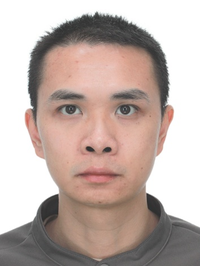
覃锦程,广西民族大学物理与电子信息学院讲师,硕士生导师,博士毕业于日本名古屋大学机械系统工程专业,2025年广西青年科技人才托举工程托举对象。现主要研究方向为基于边界元法的计算声学、力学与电磁学以及相关拓扑优化方法等,在相关领域发表论文十余篇。